
News
JOE CAMILLERI: THE BLACK SORROWS BLUES ON BROADBEACH INTERVIEW 0
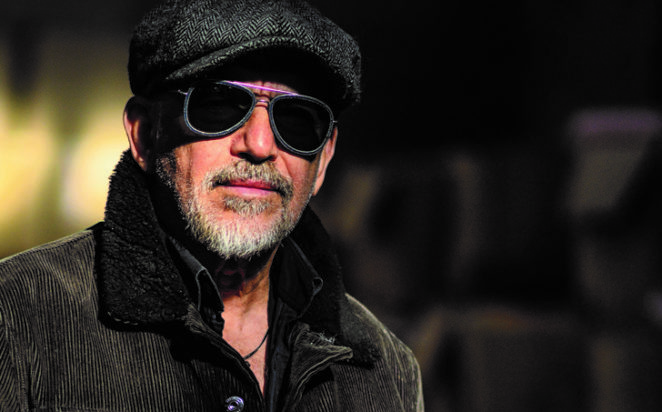
Australian Musician’s Greg Phillips chats to local music legend Joe Camilleri about The Black Sorrows appearance at Blues on Broadbeach in May.
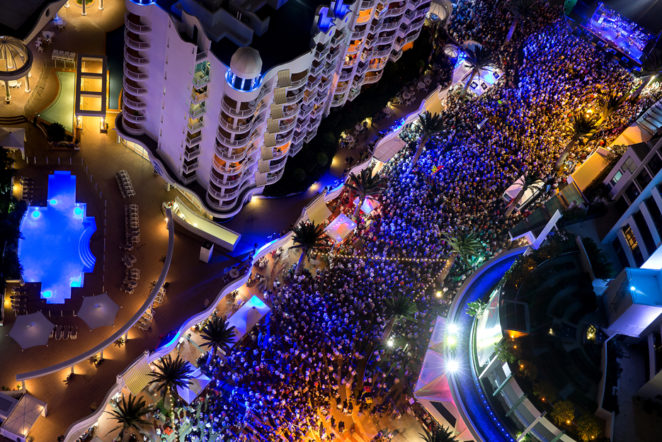
“At night you’ve got all the lights, people out in apartments and it is quite exciting,” Australian rock legend Joe Camilleri tells me. His iconic band The Black Sorrows has just been revealed as a featured act in the second huge lineup announcement for Blues on Broadbeach, Australia’s largest free music festival, which happens May 14-17, 2020 on the Gold Coast. In fact over 25 more unmissable acts have been added to an already impressive bill which will perform across 20 dedicated areas offering more than 200 hours of live entertainment. “Everyone is having a good time,” Joe adds. “Everyone wants to have a good time and there are all these other side shows, it’s not just the main acts and it’s more of a community thing which makes it interesting.”
Joe is quick to point out that many cities around the world present free music festivals but it’s the street vibe about Blues on Broadbeach that he appreciates most. “That’s what I love about it. You play a lot of festivals with a lot of good bands and they do that everywhere, they do it at St Kilda too but there is something about a good block party … People just want a knees up and block out whatever else they’ve been doing and if I happen to be that geezer (performing for them) … then I want to deliver.”
Clearly performing at music festivals provides much joy for Joe but it wasn’t always like that. His first festival experience at the Sunbury music festival back in early 70s was a nightmare. “I was playing in the Double Decker Brothers and I should have just remembered that straight away because we played after Billy Thorpe! We were a 15 piece art band. They loved Billy Thorpe and they loved us in a different way (laughs). It was an incredible experience for me to see … not so much hatred necessarily … well, it was close to it actually! We had to dance or die and with that one we died. I think the first festival that I went to though, was the Myponga music festival in Adelaide. That was incredible just being a punter in that environment and seeing all these bands. I think Black Sabbath played that one. With Sunbury, it was certainly exciting to be in front of so many people, even though we were hated by this crowd. Of course I have had the opposite of that. I’ve had the joy and love but you only carry the scars (laughs).”
These days the love for Joe Camilleri and The Black Sorrows reaches far and wide. In the last few years the band has been able to successfully tour Europe, a market they hadn’t tackled for some time due to Joe’s aversion to flying. Like so many other Australian bands, Europe and Germany in particular have been appreciative of acts from downunder heading over to tour and The Sorrows will head back again later in 2020. “They love their blues and they love Americana,” Joe says of the German audiences. “I think after being there, they really appreciate the musicianship of our ban … If they like something they go nuts. They do it in Norway too, maybe it’s the cold parts of the world, they keep clapping and you have to tell them to shut up! They have this wonderful thing and we have it here too … we have it at this festival, Broadbeach, this community thing. But a lot of Australian bands go to Europe now and you don’t know about it. There was a time when that would have been big news but those days are gone, you’re working invisibly now”
Around the same time The Black Sorrows head back to Europe, they’ll also be releasing their 22nd album, which happens to be the 50th album of Joe’s celebrated career. For the new album, Joe reconnected with International record producer Peter Solley, who has produced many of Joe’s biggest selling albums.
“I gave this guy the gig, Peter Solley who did all my albums for Jo Jo Zep and the Falcons, “Joe explains. “We reunited in a weird way. He was going to Vietnam and thought he might want to pop down to Australia again. So he stayed with me and out of that we decided to make a record and he had stopped making records, he’s just been playing organ … he plays with everyone. I said you’re 71 and I’m 72, this could be the last tango, why don’t we make this record together? I had all these songs, I’m going to make it anyway, why don’t you come down, I’ll pay ya and we’ll make an album and that’s exactly what we did. There were a lot of things I didn’t particularly like but I said he’s doing the job and you can’t interfere with someone’s soup otherwise it’s not going to be his soup … but he likes what I do. He likes the integrity of what I try to achieve and likes that the songs are a bit dark and come to you in a certain kind of way. Every song is in a different style, he likes that, it’s not set and forget. It’s not like AC/DC where you know what you’re going to get. I’m trying to find myself in a place I have never been before and he likes that.”
For Joe’s Blues on Broadbeach performance he’ll be playing his trusty ’64 Gretsch Country Gentleman.
“I have been playing that for years,” he tells me. “It’s one of those guitars that keeps on giving and providing the airlines don’t break it, it stays in tune. Mind you, I use barbed wire for strings. I just play rhythm. With strings, I’m up to 54s down to 13s, pretty heavy strings. When I am away I play through an (Vox) AC30 amp and that does the job for me with my minimal technique. I’d rather not play the guitar at all and just concentrate on sax and singing but because of the way we structure everything, the band doesn’t know what song I am going to play next. So there are plenty of songs that I start on guitar and that’s how I get things moving for them. Otherwise you’ve got to tell them what to play, you’ve got to have a song list and to me a songlist would be the most restrictive component that you can have. I don’t like the idea of walking in there and saying we’ll be doing this. I like it when I walk in and they ask what’s our first song Joe? I’ll say, don’t know yet I will tell you as soon as I get up there.”
If you’d like to find out what songs The Black Sorrows will play, be at The 19th Blues on Broadbeach Music Festival will be held from Thursday 14th May to Sunday 17th May 2020.
About Blues on Broadbeach
One of the largest free music events in Australia, Blues on Broadbeach sees over 200,000 people attend the four-day festival each year. The festival allows patrons to enjoy over 200 hours of entertainment in stunning locations throughout Broadbeach’s streets, parks, bars and restaurants.
Fly or drive and stay in the heart of Broadbeach with the festival right on your doorstep! There are many sophisticated accommodation options in the precinct from five-star hotels to self-contained apartments, satisfying all needs and budgets. Check out Broadbeach accommodation here.
Blues on Broadbeach 2020 second line up announcement
THE BLACK SORROWS
G. LOVE (USA) – DON BRYANT AND THE BO-KEYS (USA)
BOOTLEG RASCAL – TAMI NEILSON (NZ)
KAREN LEE ANDREWS – HAT FITZ AND CARA (AUS/IRE)
RAY BEADLE & THE HI-TONES – THE SOUL MOVERS
LI’L CHUCK THE ONE MAN SKIFFLE MACHINE (NZ)
DEVILS KIOSK DUO – DEAN HAITANI – MOJO WEBB & WIL SARGISSON
TIM STOKES – EAMON DILWORTH’S CRAWFISH PO’BOYS – BB FACTORY
DEZZIE D AND THE STINGRAYZ – BENNY D WILLIAMS – MIKE BEALE
MIKE ELRINGTON – TROMBONE KELLIE GANG – B-DADDY AND THE DOUBLE D’S
SIMON KINNEY-LEWIS BAND WITH SPECIAL GUEST ANDY JUST
ADAM HOLE BAND – SLIPS AND THE FW’S – JULIAN JAMES
NIKOLAINE MARTIN – MATTHEW ARMITAGE – PATRIK WILLIAMS
To join the already announced….
TOMMY EMMANUEL
GABY MORENO – KARISE EDEN
KIM CHURCHILL – BONDI CIGARS
THE TURNER BROWN BAND USA – OSAKA MONAURAIL JAPAN
JEFF LANG – FIONA BOYES & THE FORTUNE TELLERS
THE MASON RACK BAND – ALLENSWORTH USA
SHAUN KIRK – DAN DINNEN & SHORTY
JULES BOULT & THE REDEEMERS
PETE CORNELIUS BAND – MINNIE MARKS
THIS WAY NORTH – GRACE & HUGH – SWEET THUNDER JAZZ ORCHESTRA
All Blues on Broadbeach info HERE
- Shop HHM
KIM CHURCHILL BLUES ON BROADBEACH 2020 INTERVIEW 0
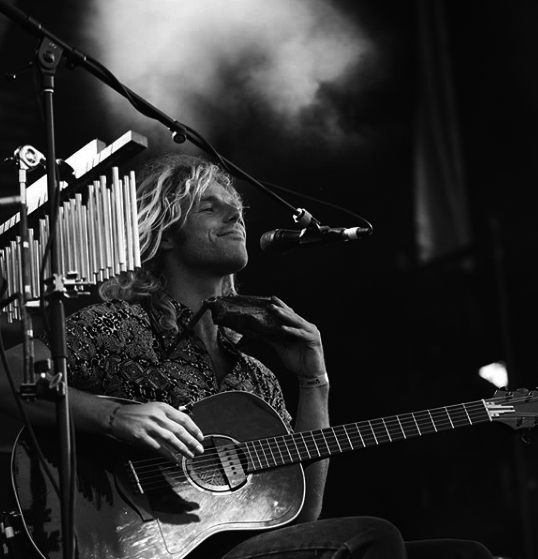
Blues on Broadbeach, one of the largest FREE music events in Australia will be held May 14-17, 2020. Almost 70 acts will perform at the 2020 Festival including Tommy Emmanuel, Gaby Moreno, Karise Eden, Bondi Cigars and more, with a new announcement of acts due on March 5. One of the high profile acts already confirmed is singer songwriter and journeyman Kim Churchill. The internationally acclaimed folk rock artist has not only been busy traveling the globe and recording a 4 part EP series, but he’s also been living a gypsy life at home too, courtesy of his new van fitted out with a stage and a solar powered PA system he’s been working on with Yamaha Music. Australian Musician’s Greg Phillips spoke to Kim about Blues on Broadbeach and caught up on all his other fabulous news.

Was there a defining moment as a kid when you decided you wanted to play music for rest of your life?
Wow that’s a phenomenal way to begin! As I think back there was a moment where I was laying on the floor at home in Merimbula where I grew up. I was about 8 years old and I was absolutely lost in the solo to Stairway to Heaven. I had Led Zeppelin IV on CD and I just obsessed with it and learned the whole of Stairway to Heaven and the solo and would play along with Jimmy Page. That for me is a really defining moment. In hindsight I think at that point it planted the seed for this is what I want to do with my life. It’s not that it wasn’t about music before then because I started when I was really young but back then it was thrown in with soccer practice and nippers. It was an activity I enjoyed and I also liked the identity of being the kid with the guitar. I liked walking to school with the guitar. When I was 8 or 9 was when I first started getting the feelings of creative flow that indicated a fire in me for music that would drive me on to prioritise it above everything else.
Did you have a local music store growing up that you’d visit and check out the guitars?
I did it was in Bega so that was about half an hour away but I would catch the bus to Bega once or twice a week just to go to that music store. Also above the music store they little studio rooms where they would have music lessons so it was also where I learned to play, it was definitely a little mecca for me.
Where do you find inspiration these days?
I am incredibly inspired by … especially in the last year … I have taken a huge step in the direction of making my life the body of work, fitting out a camper van that I can live in that has a stage that slides out of the side of it. I have recording equipment in there and I sort of drift from beach to beach, town to town and play music venues and I guess living this gypsy life. I find that within this way of life there are opportunities once a day or every couple of days just to sit down at some wonderful location by a river or under some trees to pull out my guitar and play for hours if I want. A lot of my songs are coming from those extended times of performing, just performing for my own enjoyment and it fits in so well with this life I have created. If anything, now my creativity comes from the lifestyle, traveling and playing shows and being in new places.
Your latest 4 part recording project is all about traveling too …
It’s a song collection which I am releasing across 4 EPs which goes under the collective title I Am Forgetting The End Again. The first EP is called I Am and that was recorded in Berlin with a hip hop producer named Vincent Kottkamp. Then I traveled to Canada and recorded Forgetting, which was done in a shack out in the British Columbian rain forest out on Vancouver Island with a psychedelic rock producer named Colin Stewart. The next EP that comes out is called The End and for that one I went to the Blue Mountains here in Australia and recorded with Ian Pritchett, who I worked with on an album called Weight Falls a few years ago and he is a dear friend. I’d say he is one of the most prolific Australian producers and has no interest in notoriety, so not many people have heard of him but he’s done Angus and Julia Stone and The Beautiful Girls, COG and more recently Boo Seeker and other electronic stuff. The final EP was recorded in Devon in the UK with the guys who grew up playing with Ben Howard. They went out on their own and Chris Bond then started working with artists and I loved a lot of what he was doing. He helps acoustic singer songwriters take a leap out of the two dimensional world into a beautiful, larger 3 dimensional sonic landscape.

You are playing Blues on Broadbeach this year. Tell us about your history with that festival.
I played there way back in 2012, 2013. I played there two years in a row and I had a phenomenal experience. They are great supporters of up and coming blues and roots artists and you just know that if you play there you are going to see all of your friends and the opportunity to spend time with each other and play music with each other. So yes, I had a couple of really beautiful years going to that festival and it will be lovely to be back.
Will your set list be concentrating on material from the new EPs?
Yeah I am getting to the point now where I have so many songs and it’s hard to fit everything that I want to play into a set these days. It will be a fair bit of material from I Am and Forgetting, then that will be fleshed out with some of the songs that have been solid rocks in my set list, so it will be a nice little mix. Also I have been playing these gigs called one One Mic, One Light. I have been playing really small venues and just doing 5 or 6 evenings. They are so intimate and the silence is so thorough that I can hear the ice cubes melting in people’s drinks. Wonderfully, the inverse of that is a festival like Blues On Broadbeach and getting on a larger stage with my kick drum and guitar amplifier and having a good bash, it’s like an enormous release for me now. It will be phenomenal to play the main stage at Blues on Broadbeach and just have a really good whack.
Tell me about your current stage rig.
It’s funny, it builds and it scales back and builds and scales back again. I feel like every time I build it up, I scale back ninety percent of it and the ten percent that’s left I get very experimental. Now I have a kick drum which has a snare trigger. I sometimes sit with a tambourine as well but I have moved toward standing more now because it seems a bit more present and I can create more of a vibe. The guitar itself runs through 5 or 6 different lines, which run to a guitar amplifier, a bass amplifier, some sort of sub harmonic lines which create some really fat low end sounds. Then there’s the acoustic sound of the guitar and the body percussion sounds, the tapping on the body. The guitar is this immense wall of layers and sounds. I sing and play harmonica and the harmonica runs through effects as well. The psychedelic element of what I do is in the harmonica
Is the Churchill (no relation) guitar still your main guitar?
Yes although a bloody delivery company lost one of my Churchills recently which has been a nightmare. I had twins, two guitars made from the same tree and they would fly everywhere with me, so it has been sad to lose the back up. I still have two Churchills on the road with me at all times.
How did you come across David Churchill’s guitars in the first place?
For me, finding an Australian guitarist that I really idolised … that was Jeff Lang. I became obsessed with him after I had seen him at Byron Bay Blues Festival when I was about 14. I listened to all his music and devoured anything he had to offer. When I was 17 he came and played a show in Merimbula and I got to talk to him after the show and asked him about the guitars he had been playing and he said they are Churchills. I said that’s amazing my second name is Churchill. From that moment I thought they are the guitars for me, Langy plays them, it’s my second name .. how cool would it be to have a guitar with my name on the headstock! It was a few years later that I met David at Port Fairy Folk Festival and fortuitously my parents were there and they’ don’t get to a lot of my concerts around the world. They were at that one and saw how important it was to me that I was meeting David and he had a guitar for sale there and they actually helped me buy the guitar and allowed me to pay it off over a few years. So all of a sudden I had my first Churchill and I have ordered 3 more since then.
Apart from Blues on Broadbeach, what’s on for the rest of 2020?
I have just started a tour called the Bright Night sessions which is a really extensive regional tour. I have built this new camper van rig that has a stage that slides out of the side door. I have worked with Yamaha on a solar powered PA system which runs off a solar panel on the roof. The Bright Night sessions is partly an opportunity to start playing shows on my camper van stage but also a chance to reconnect with a whole bunch of music communities that I have got to know over the years. For the last 4 or 5 years though, there has been such a push toward radio and I have been working with record companies and playing all over the world, across North America and Europe and I haven’t had the opportunity to visit these beautiful grass roots music communities that I know and love in Australia. I began to notice that I wasn’t as happy as I used to be. It seemed to me that I used to get a lot of joy out of visiting those communities and keeping the relationship healthy so the Bright Night sessions is an opportunity to really reconnect with a lot of those music communities and rock up in my van and throw on a gig for a 150 people.
Blues on Broadbeach, one of the largest FREE music events in Australia will be held May 14-17, 2020. Almost 70 acts will perform at the 2020 Festival including Tommy Emmanuel; Gaby Moreno; Karise Eden; Kim Churchill; Bondi Cigars and more. The event will feature 20 performance areas including the headline stages in Surf Parade, the Broadbeach Mall and Victoria Park. Blues on Broadbeach starts early in the morning and runs late into the night within Broadbeach venues. Next artist announcement is March 5th
- Dom DiSisto
CIRQUE DU SOLEIL: A KURIOS BAND OF MUSICIANS 1
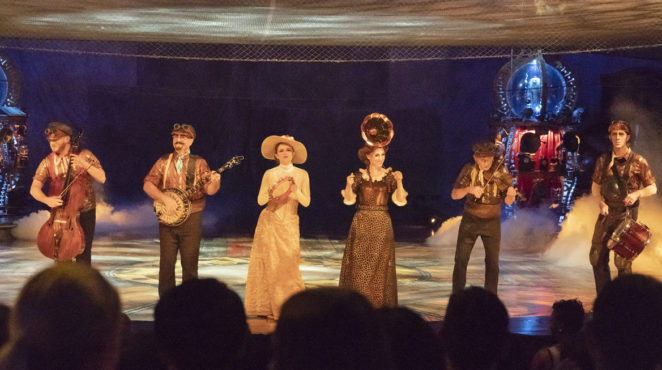
Australian Musician’s Greg Phillips catches up with Marc Sohier and Paul Butler, two key members of the Cirque du Soleil band currently playing in the show KURIOS
The notion of a circus coming to town conjures up all kinds of nostalgic thoughts. A parade of bohemian strangers arriving in a nearby park, setting up a huge big top tent and creating a carnival atmosphere can be very enticing. Of course the traditional Barnum & Bailey style circus days, where trained animals were the stars of the show have long gone. Today’s modern day circus is all about an extraordinary human experience and since 1984, the kings of the genre have been the Cirque du Soleil Entertainment Group.
Established in Montreal, the Canadian organization has brought wonder and delight to over 190 million spectators with productions presented in close to 450 cities in 60 countries. Cirque du Soleil Entertainment Group currently has over 4,000 employees, including 1,400 artists, from nearly 50 countries. The latest Cirque du Soleil production which is currently in Australia and heading to Melbourne is KURIOS, featuring a cast of 47 artists from 17 countries including world-class gymnasts, acrobats, contortionists, hand-puppeteers, yo-yo wizards, clowns, actors and musicians. KURIOS – Cabinet of Curiosities is a tale in which time comes to a complete stop, transporting the audience inside a fantasy world where everything is possible. In this realm set in the latter half of the nineteenth century, reality is quite relative indeed as our perception of it is utterly transformed.
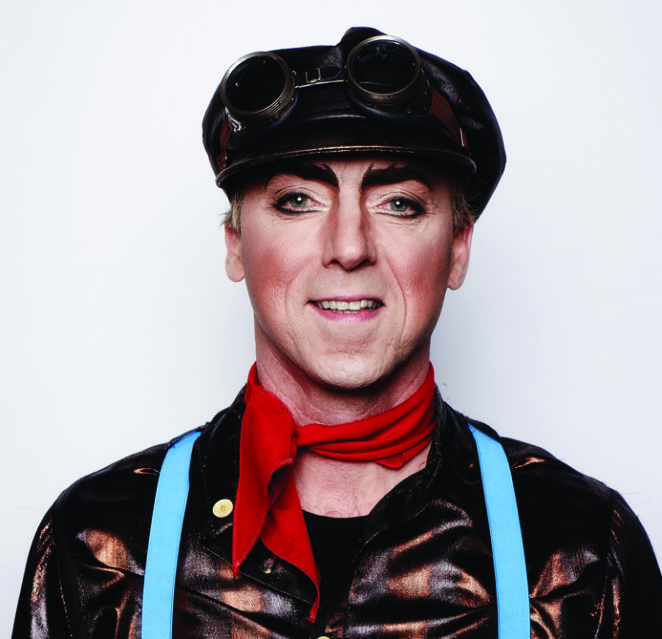
Marc Sohier
Not only is KURIOS a visually stunning show, the music too plays a major role in building the drama and helping to create such an enjoyable adventure for the audience. Marc Sohier, bandleader and bass player for KURIOS has the nightly responsibility of keeping the musical component together.
After studying jazz bass at the University of Montreal and doing freelance work around the Quebec province, Sohier found himself enroute to New York in 1992 to catch up with friends who were performing with the Cirque du Soleil group in the show Saltimbanco. “Two days before I arrived in New York, there were two musicians who left the show, so it was perfect timing,” Marc recalls. “They asked me if I wanted to join, so I joined the circus a couple of months after. I am still working with the company after all those years. I took 7 years off from 2009 to beginning of 2014 with KURIOS. After 7 years break I was ready to start that crazy life again. I’m back playing bass, leading the band and taking care of the music.”
For Sohier, it’s a challenging assignment which requires intense concentration and versatility, while at the same time trying to stay relaxed and radiating a sense of joy. “The job is more like a moving movie soundtrack,” he explains. “We have action happening in front of us which is really organic, changing all the time. The music is played in sections and we may have to expand or extend and improvise, so my job is mainly to keep the synchronisation with what we are seeing but unlike a movie soundtrack, this one is different every day. You have to be relaxed but at the same time, you have to be there mentally. You cannot suddenly start thinking about something else, there is no room for that. You need to be there from moment to moment and be ready to react if the section becomes longer or shorter or they skip something. There may be a brand new challenge that is about to happen, so you have to be ready.”
Marc learned about the importance of concentration very early on in his Cirque days. He had only been playing bass in the Saltimbanco show band for a week when he found himself mesmerised by the skill of the circus performers and had an out of body experience. “At one point I was playing and I became like a person sitting in the house looking at the show,” he laughs as he recalls the moment. “I was hearing the bass and thinking my god the bass is wrong and then I came back in my head and thought, oh no … I am the bass player! I was totally looking at the show and I was gone. I have concentrated ever since because I don’t want that to ever happen again.”
There are four basses which Marc uses in the current show, his main bass being a 5 string fretted MusicMan. He also has a custom made fretless bass which was created by a Montreal-based guitar builder, a Hofner bass, and an NS Design electric upright. “All of this goes through a bi-amp system with the API pre amp. I go into a channel of my API … I go through my Lexicon processor for the effects and I go back and re-amp the signal and then I send those 2 channels to the front of house, there are no amps. We are all on in-ear monitors. So I don’t have my big Ampeg, it’s at home.”
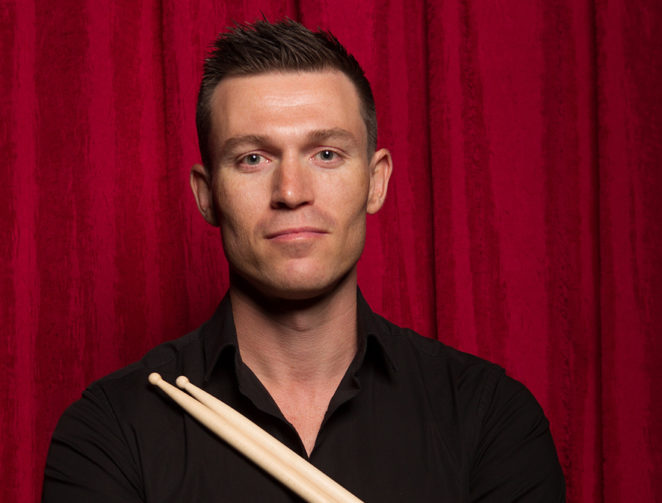
Paul Butler
Marc’s comrade in rhythm is Adelaide-based drummer Paul Butler, who has been with Cirque for nine years. Paul came up through the ranks of the Adelaide music scene, idolising the likes of Vinnie Colaiuta and Stewart Copeland and found himself doing a seven year stint with the South Australian Police Band, despite not being a cop himself. Paul has also studied percussion at various respected institutions both here and overseas and has toured the world extensively. Like Marc, Paul’s introduction to Cirque du Soleil was through musician friends who had been performing with the company and suggested he audition. “I did my first show with Cirque 9 years ago, a show called CORTEO,” he says. “I was with that show for 5 years and went through Europe and South America, Central America and Mexico. After that I auditioned for another show KOOZA, and I was on that show for 3 years and we toured Australia, Asia, Singapore, China, Korea and Europe. And now I have joined KURIOS after another audition. Even though you’ve been with shows for many years, you still have to prove your worth and audition each time, which is good. It keeps people honest.”
In regard to his role in the band, Butler echoes Sohier’s thoughts on concentration and the need to be flexible but also not forgetting to inject a little of his own musical flair into the mix. “A challenge is to be consistent and provide a good platform for the artists on stage and not just support them but enhance them,” he explains. “We like to provide a solid foundation but I also like to be creative and put a little flavour in there that will inspire them to enjoy what they are doing. We do a lot of shows, 300 plus a year so you want to keep it fresh. The music does evolve, it’s live entertainment and with the action on stage, we have to move and be prepared to change at any moment in time. The challenge is to do that in the most musical way possible but also to hit the point, to accentuate the action as it happens.”
For KURIOS, Paul is using a basic 5 piece kit, a kick, snare, 12”, 14”, 16”, toms and a bunch of cymbals, ranging from crashes to chinas. There is also an element of electronics that Paul uses in the show. “I use a Roland Bar trigger to trigger some things but I’m also the assistant bandleader, so when I am running the show for the band and giving them the cues for the music, we run through Ableton. Being a drummer I don’t want to be on a talk back and playing drums into the mic, so this way I don’t have to. I have lots of pre-recorded counts and calls and things and I launch them off a Roland SPD FX pad.”
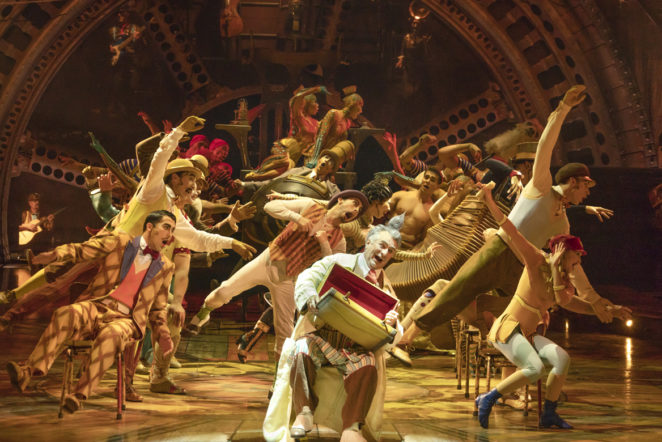
Brisbane audiences have been loving the KURIOS show and in March it heads south for the Melbourne season. Paul is proud of the part he plays in the show and believes everyone should make the effort to experience the magic of KURIOS. “From beginning to end it is just a great show,” he tells me. “Everything is well thought out, well designed. It’s high energy, it’s positive but it also takes you on a journey.”
Marc Sohier also suggests that KURIOS is one of the best Cirque shows that he has been involved with. “A lot of shows get so big and mechanical but this is more of a human experience,” he says. “The costumes are amazing, the music is beautiful and it’s extremely melodic. It’s a feel-good show. Everybody will get something out of it. I look out and see people smiling and I think they get much more than what they pay for.”
Melbourne Season: From 12 March – 10 May 2020
Venue: Under the grey and white Big Top at Flemington Racecourse
Performances: Tuesday to Friday 8pm; Saturday 4:30pm & 8pm; Sunday 1:30pm & 5pm
Tickets: From $80
Bookings: www.cirquedusoleil.com/kurios or 1800 036 685
Following Melbourne KURIOS plays:
29 May – 7 June, Adelaide, Showground
15 July – 2 August, Perth, Claremont Showground
- Dom DiSisto
LEVEL 42 TO TOUR AUSTRALIA & NZ FOR FIRST TIME IN MAY 0

Level 42 touring Australia and New Zealand for the first time in May 2020
May 14 PERTH Astor Theatre
May 16 MELBOURNE Palais Theatre
May 18 SYDNEY Enmore Theatre
May 20 AUCKLAND The Civic
Level 42 left their mark on the 1980’s with a polished, upbeat, danceable pop/rock sound largely defined by lead singer / bassist Mark King’s thumb-slap bass technique. Catchy hits such as ‘Lessons in Love’, ‘Running in the Family’ and ‘Something About You’ crossed the band from their jazz-funk fusion roots firmly into the mainstream pop charts and gave them a fanbase worldwide.
To date Mark King and the band have released 14 studio albums, 7 live albums, and 6 compilation albums, had 18 top 40 singles, including Lessons in Love, Something About You, Leaving Me Now, Running in the Family, and Hot Water, selling in excess of 30 million albums worldwide.
As a live act Level 42 have primarily toured the UK (They’ve sold out London’s Wembley Arena for a total of 21 nights over their career), Scandinavia and Continental Europe, and have had a number of forays into the North American market on arena tours with the likes of Peter Gabriel and Steve Winwood. Why they never made it down-under for concerts has Mark King scratching his head, but he is rapt the opportunity is finally here 40 years into his career, “Touring with the band this year has been about as much fun as I can remember having had on the road, and If you had asked me back in 1980 if I thought we would be selling out theatres around the world when I was sixty years old I probably would have laughed! Re-invention can be a wonderful thing!”
At the beginning of their career, Level 42 was squarely a jazz-funk fusion band, contemporaries of fellow Brit funk groups like Atmosfear, Light of the World, Incognito, and Beggar & Co. The band’s commercial peak came with 1985’s World Machine. Starting out as ‘The Early Tapes’ on the Isle of Wight in 1979, the band featured Mark King (bass, vocals) and Mike Lindup (keyboards) who are both still in the band today, along with brothers Phil Gould (drums) and Boon Gould (guitar). Before they released their first single, “Love Meeting Love,” as the band were initially an instrumental act, they were pushed to add vocals to their music in order to give it a more commercial sound. Mark King became the lead singer. Level 42 had several minor hit singles before 1984’s “The Sun Goes Down (Living It Up)” hit the British Top Ten. Released in late 1985, World Machine broke the band worldwide; “Lessons in Love” hit number one in Britain and “Something About You” hit number seven in America. Their next two records, Running in the Family (1987) and Staring at the Sun (1988), were a big success in the U.K., yet made little headway in the U.S. Both of the Gould brothers left the band in late 1987; they were replaced by guitarist Alan Murphy and drummer Gary Husband. Murphy died of an AIDS-related illness in 1989; he was replaced by the renowned fusion guitarist Alan Holdsworth for 1991’s Guaranteed. The band followed Guaranteed in 1995 with Forever Now.
Throughout the remainder of the ‘90s and the 2000s, the band’s line-up fluctuated, with King the lone constant and his brother, guitarist Nathan King, onboard since 2001. In 2010, the band celebrated its 30th anniversary with a special tour, as well as a box set, Living It Up, which included a disc of fresh acoustic versions recorded by Mark King and Lindup. 2010 also saw Husband leave the band once again, replaced by Pete Ray Biggin. The group continued to tour over the next few years before releasing new material in 2013, in the form of the EP Sirens. Supporting the release with an extensive tour of the U.K. and Europe, the group also recorded the live release The Sirens Tour, at their stop in London in 2015. The band continued to tour into 2016 with performances at festivals across Europe and South America. 2019 proved to be another very busy year for Level 42 with the guys playing 20 festivals from Quebec to Russia, Denmark, Holland, Germany, Switzerland, Ireland, and the UK.
2020 will see the From Eternity To Here Tour as the guys take to the road with a string of festivals and concerts worldwide. A Royal Albert Hall date awaits them in the middle of an extensive UK tour in October / November.
Level 42 have proven to be one of the most successful and enduring British bands of the 1980’s, and with the recent re-issues of the bands vast catalogue on Universal Music, and the ‘Collected’ series on CD and Vinyl, it is clear they continue to be a benchmark for British Jazz Funk at the highest level.
Level 42 Australia & NZ tour Facebook events links:
Perth https://www.facebook.com/events/591180274945811/
Melbourne https://www.facebook.com/events/490194911930219/
Sydney https://www.facebook.com/events/196392394888435/
Level 42 are:
Mark King bass/vocals
Mike Lindup keys/vocals
Nathan King guitar/vocals
Sean Freeman sax/vocals
Dan Carpenter trumpet/vocals
Nichol Thomson trombone/vocals
Pete Ray Biggin drums
- Dom DiSisto
SUZI QUATRO NAMM 2020 INTERVIEW 0
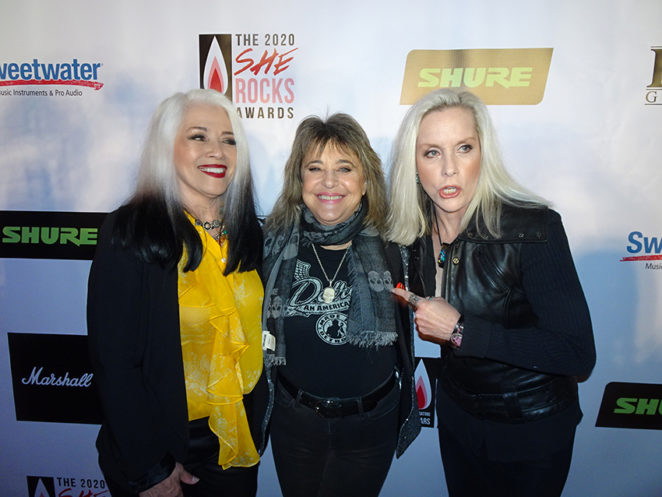
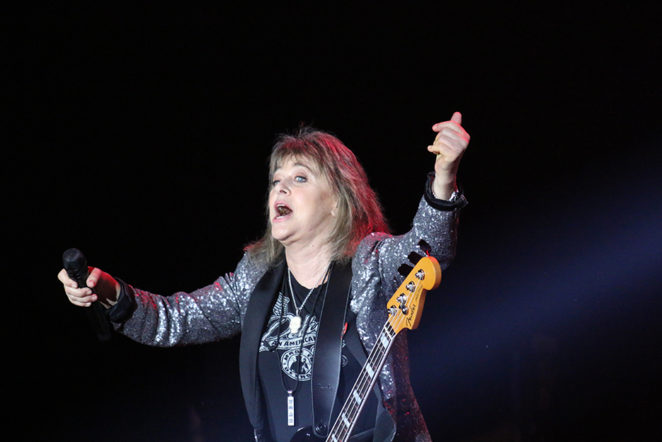
Australian Musician caught up with American rock legend Suzi Quatro for an in-depth interview at the Winter NAMM Show this year. Suzi was in town to be honored at the 8th annual She Rocks Awards. We spoke about her beginnings, her long, successful career, her bass gear, the She Rocks Awards, her relationship with Australia, and she also revealed that she agreed on a motion picture deal based on her life story.
The interview was conducted for NAMM’s Oral History archive. The NAMM Oral History Collection is unique, unlike any other collection in the world. The heart of the Collection is the depth of its narratives that cover innovative creations, the evolution of musical instruments, the ever-changing world of music retail, as well as our collective quest to improve music education around the globe.
The NAMM Oral History archive can be found at – https://www.namm.org/library/oral-history/all
Thank you to NAMM for permission to post the interview
Suzi Quatro is an American rock singer-songwriter, multi-instrumentalist and actress. Suzi is widely regarded as being the first female bass player to become an international rock star and an inspiration to the many female musicians who have followed. Suzi topped the charts in many countries worldwide in the 70s with hits such as Can The Can, 48 Crash and Devil Gate Drive, as well as Stumblin’ In, a global duo hit with Smokie’s Chris Norman. Suzi also became a TV star due to the popularity of her character Leather Tuscadero in the hit show Happy Days. Suzi continues to record and tour internationally.
Stage photos by Greg Phillips. Red carpet photo by Debbie Kruger
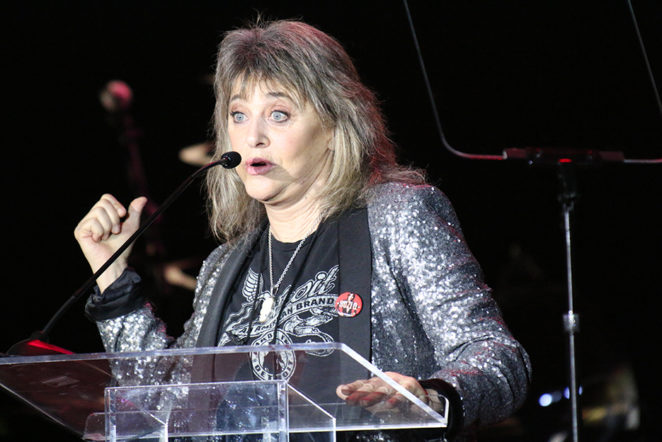
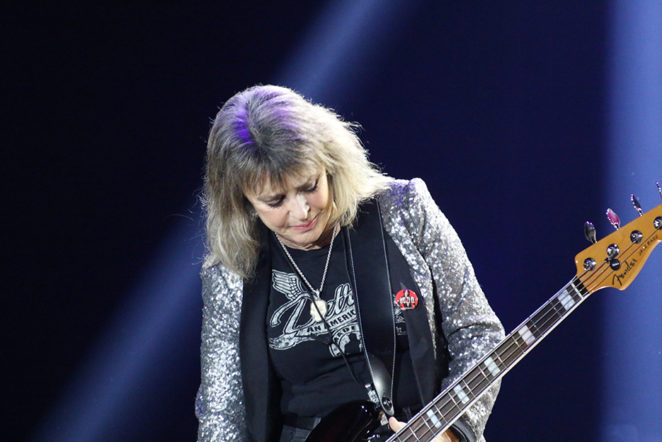
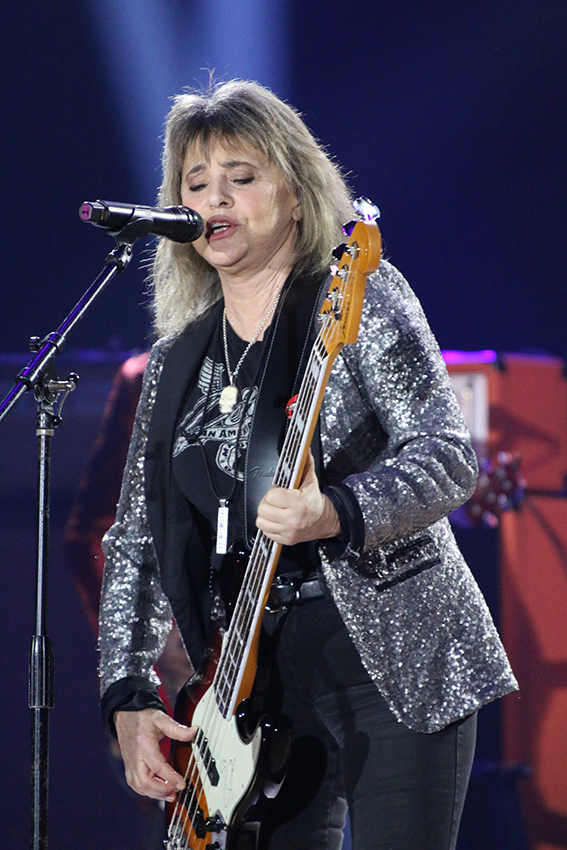
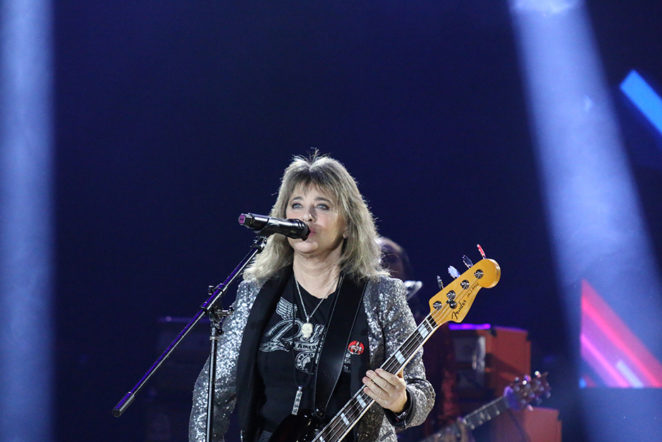
- Dom DiSisto
Neil Peart, Rush Drummer Who Set a New Standard for Rock Virtuosity, Dead at 67 0

Neil Peart, the virtuoso drummer and lyricist for Rush, died Tuesday, January 7th, in Santa Monica, California, at age 67, according to Elliot Mintz, a family spokesperson. The cause was brain cancer, which Peart had been quietly battling for three-and-a-half years. A representative for the band confirmed the news to Rolling Stone.
Peart was one of rock’s greatest drummers, with a flamboyant yet precise style that paid homage to his hero, the Who’s Keith Moon, while expanding the technical and imaginative possibilities of his instrument. He joined singer-bassist Geddy Lee and guitarist Alex Lifeson in Rush in 1974, and his musicianship and literate, philosophical lyrics – which initially drew on Ayn Rand and science fiction, and later became more personal and emotive – helped make the trio one of the classic-rock era’s essential bands. His drum fills on songs like “Tom Sawyer” were pop hooks in their own right, each one an indelible mini-composition; his lengthy drum solos, carefully constructed and packed with drama, were highlights of every Rush concert.
In a statement released Friday afternoon, Lee and Lifeson called Peart their “friend, soul brother and bandmate over 45 years,” and said he had been “incredibly brave” in his battle with glioblastoma, an aggressive form of brain cancer. “We ask that friends, fans, and media alike understandably respect the family’s need for privacy and peace at this extremely painful and difficult time,” Lee and Lifeson wrote. “Those wishing to express their condolences can choose a cancer research group or charity of their choice and make a donation in Neil Peart’s name. Rest in peace, brother.”
- Dom DiSisto